

White Paper: Overcoming AI Adoption Challenges for Small and Medium-Sized Businesses in Manufacturing and Agriculture

AI Adoption
Executive Summary
Artificial Intelligence (AI) offers transformative potential for small and medium-sized businesses (SMBs) in manufacturing and agriculture, enabling enhanced efficiency, cost savings, and competitiveness. However, SMBs face significant barriers to AI adoption, including data quality issues, legacy system integration, high costs, workforce resistance, cybersecurity risks, scaling challenges, regulatory complexities, and proving return on investment (ROI). This white paper, authored by Misha Kenari of AlignX Solutions, provides a comprehensive analysis of these challenges, offering practical, resource-efficient solutions tailored to SMBs. Through real-world case studies and insights from leading industry sources, we demonstrate how SMBs can overcome these obstacles to harness AI effectively. AlignX Solutions stands ready to guide SMBs on this journey, delivering tailored consulting and partnerships to ensure seamless AI integration and sustained business value.
Table of Contents
Introduction
Limited Access to Quality Data
Integration with Legacy Systems
High Upfront Costs
Workforce Resistance and Skill Gaps
Cybersecurity Concerns
Scaling and Maintaining AI Systems
Navigating Regulatory and Ethical Challenges
Proving Return on Investment (ROI)
Case Studies: SMBs Thriving with AI
AlignX Solutions: Your Partner in AI Adoption
Conclusion and Next Steps
Introduction
AI Industries
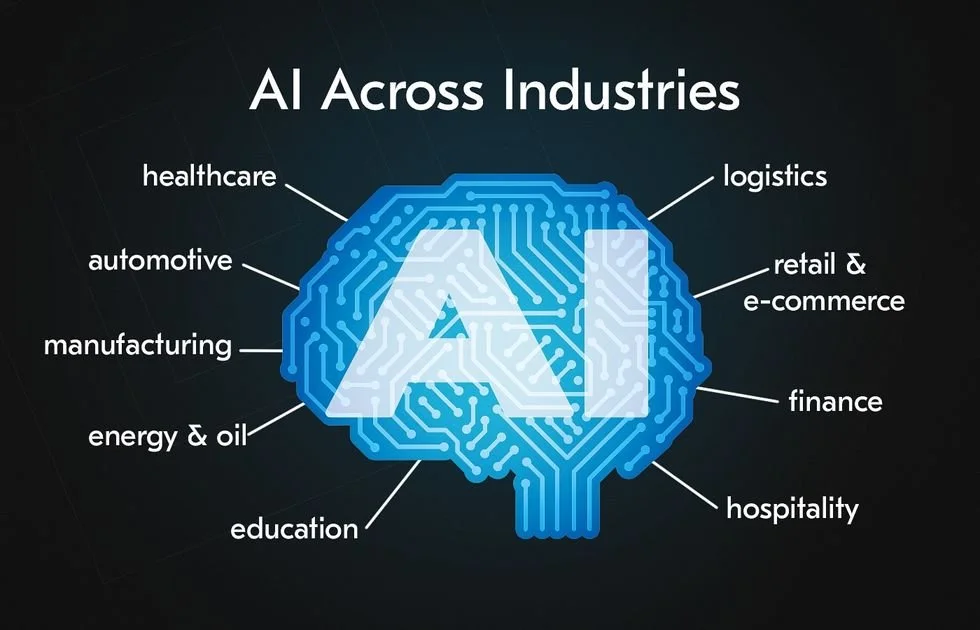
Artificial Intelligence (AI) is reshaping industries, offering small and medium-sized businesses (SMBs) in manufacturing and agriculture unprecedented opportunities to optimize operations, reduce costs, and stay competitive. From predictive maintenance in factories to precision farming, AI drives innovation. However, SMBs face unique challenges in adopting AI, including limited resources, technical expertise, and infrastructure. This white paper explores eight key barriers to AI adoption for SMBs, providing actionable solutions and real-world examples to guide businesses toward successful implementation. AlignX Solutions, with its expertise and industry partnerships, is committed to helping SMBs navigate these challenges and unlock AI’s full potential.
Limited Access to Quality Data
Data Quality
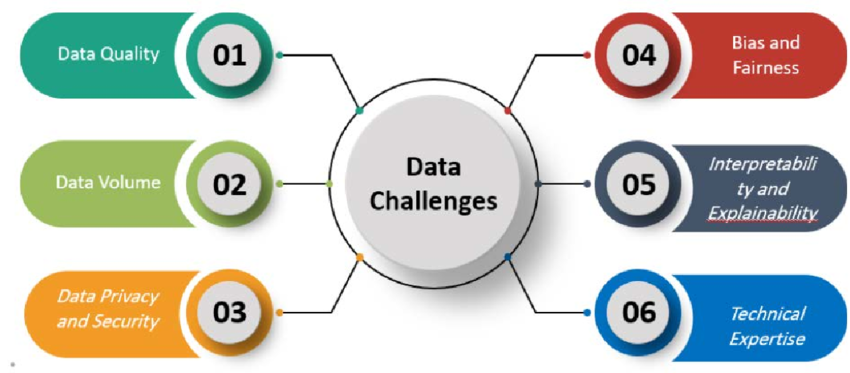
High-quality, structured data is the backbone of effective AI systems, but SMBs in manufacturing and agriculture often face significant hurdles in this area. A 2024 study found that nearly every organization implementing AI encounters data quality issues, with this being the top challenge for successful adoption. For SMBs, these issues are amplified due to reliance on legacy systems, manual record-keeping, or siloed operations, which result in fragmented, inconsistent, or incomplete datasets. In manufacturing, for example, sensor data from older machinery may be unreliable or unstandardized, while in agriculture, soil or weather data may be collected sporadically or stored in incompatible formats. These data deficiencies hinder the ability to train accurate AI models, limiting the technology’s potential to deliver insights or efficiencies.
Solution: SMBs can address data quality challenges by taking a strategic, incremental approach. Begin with a data audit to identify gaps, inconsistencies, and redundancies in existing datasets. Invest in affordable data management tools, such as cloud-based platforms, to centralize and standardize data collection. For instance, IoT sensors can be retrofitted to collect consistent data from legacy equipment or fields. Partnering with AI vendors that offer data preprocessing services can further simplify cleaning and structuring data, reducing the technical burden on SMBs with limited in-house expertise. Additionally, fostering a data-literate workforce through basic training can improve data handling practices, ensuring long-term quality and usa
Integration with Legacy Systems
AI Integration to Legacy Systems
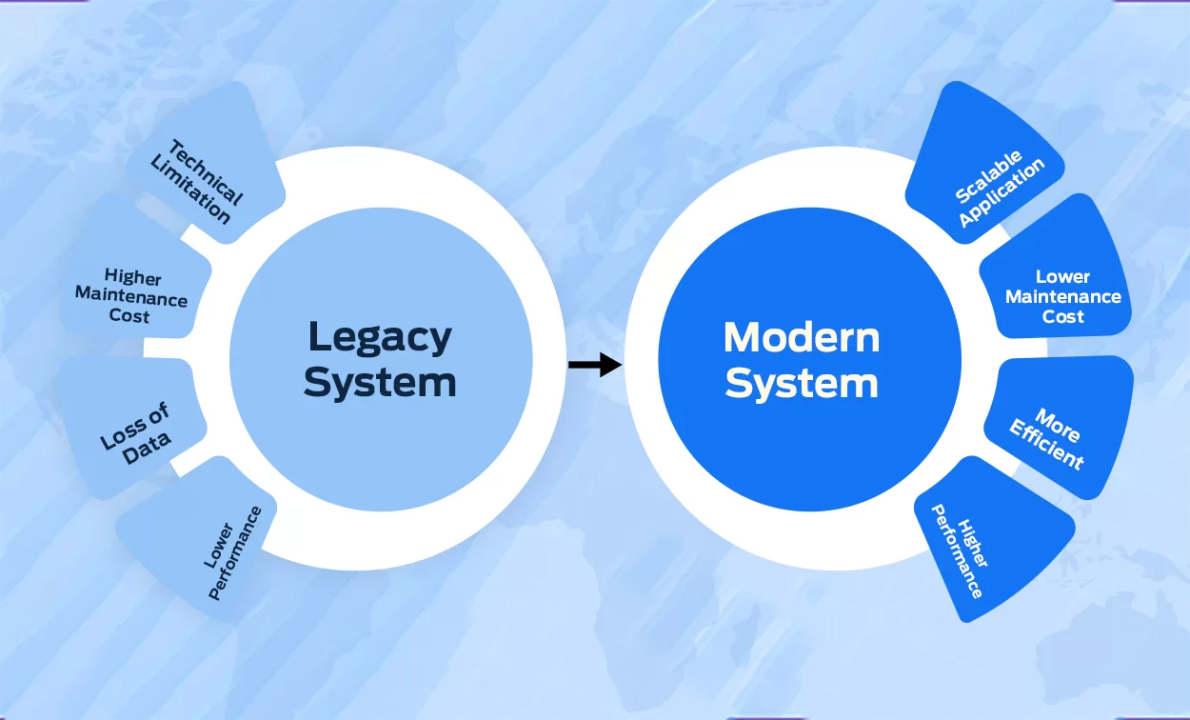
Many SMBs in manufacturing and agriculture rely on legacy systems—older machinery, software, or programming languages like COBOL or SAS—that are reliable but lack compatibility with modern AI technologies. These systems, while stable and secure, often require batch processing and cannot easily integrate with AI-driven tools, limiting agility and data utilization. For SMBs, upgrading or replacing these systems entirely is often cost-prohibitive and risks disrupting critical operations.
Leveraging AI and Modern Solutions: Modernizing legacy systems doesn’t always mean a complete overhaul. AI and cloud-based platforms can enhance existing infrastructure, much like updating an older home with smart technology. No-code AI solutions and open-source platforms simplify integration, enabling SMBs to automate tasks, optimize workflows, and extract real-time insights without replacing core systems. For example, AI can transform static reports into intelligent applications that provide actionable recommendations, improving decision-making in manufacturing or farming operations.
Cost and Efficiency Benefits:
Reduced Licensing Costs: Transitioning to open-source platforms can cut software licensing fees by up to 90%, a significant saving for SMBs.
Lower Maintenance Costs: Modernized systems reduce maintenance and energy costs by up to 50%, easing financial burdens.
Eliminating Vendor Lock-In: Open-source and cloud solutions offer flexibility, freeing SMBs from proprietary vendor dependencies.
Strategic Partnerships: SMBs often lack the in-house expertise to navigate legacy system complexities. Partnering with AI vendors and service providers with deep industry knowledge can bridge this gap. These collaborations offer AI-assisted integration, such as retrofitting IoT sensors for real-time data collection or deploying cloud-based platforms that connect seamlessly with existing equipment. Partnerships with cloud providers ensure scalability and compliance with industry standards, enabling SMBs to modernize efficiently without disrupting operations.
Solution: Start with modular AI solutions, such as cloud-based platforms or IoT sensors, that integrate with legacy systems via APIs. Pilot these integrations on a single production line or field to minimize risk. Collaborate with vendors offering SMB-friendly, no-code AI platforms to reduce technical barriers. By leveraging AI and strategic partnerships, SMBs can transform legacy systems into future-ready assets, enhancing competitiveness without the need for costly replacements.
High Upfront Costs
AI Adoption Cost Estimates
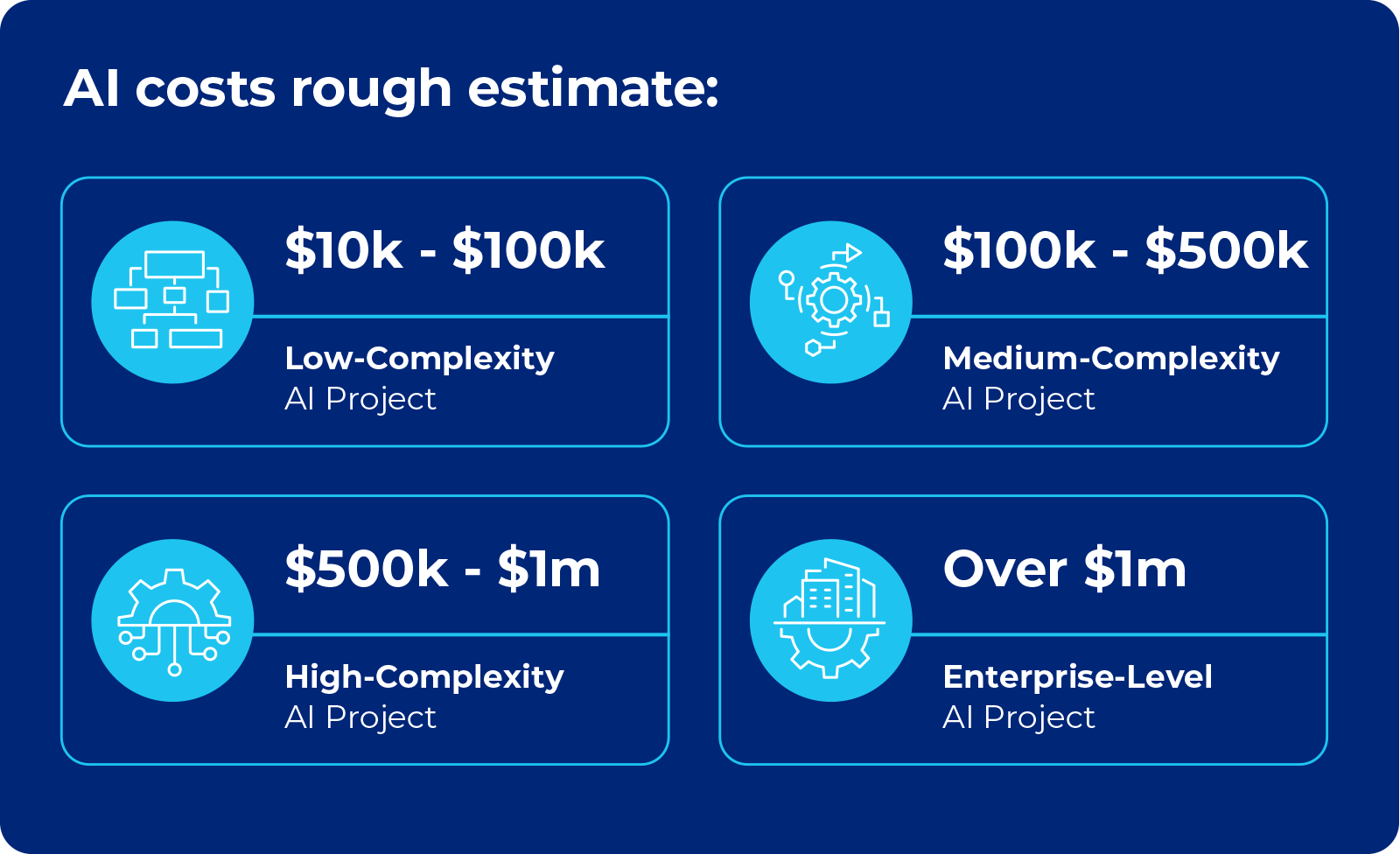
The initial investment in AI—hardware, software, training, and skilled personnel—can be a significant barrier for SMBs with limited budgets. Unlike large enterprises, SMBs often lack the financial flexibility to absorb these costs, making the perceived expense of AI adoption daunting.
Understanding AI Costs: Thanks to the growing availability of AI frameworks and tools, AI solutions are becoming more accessible to SMBs. A few years ago, only tech giants like Microsoft or Google could afford custom AI systems. Today, businesses of all sizes can leverage machine learning at more feasible prices, enabling SMBs to compete with larger players. However, costs vary based on the complexity, goals, and industry-specific needs of the AI solution.
AI Project Cost Breakdown:
Simple AI Models: Basic implementations, such as predictive maintenance or crop monitoring, start at $5,000–$20,000.
Complex AI Solutions: Advanced systems involving deep learning or custom algorithms range from $50,000 to $500,000+, depending on scope.
Industry-Specific Applications:
Manufacturing AI (e.g., quality control): $20,000–$100,000.
Agriculture AI (e.g., precision farming): $15,000–$50,000.
Additional Costs:
Hardware: High-speed servers or GPUs can cost $10,000 or more.
Software: Specialized AI tools or cloud-based platforms may involve licensing fees.
Development Team: Rates vary by region, from $25/hour in some markets to $150/hour in the US or Western Europe.
Solution: To manage costs, SMBs can adopt a phased approach, starting with small-scale pilot projects to demonstrate ROI before scaling. Subscription-based AI platforms or cloud solutions reduce upfront expenses, while government grants for digital transformation can further offset costs. As David Gasparyan, President of Phonexa, aptly stated, “No company is going to survive in the future without implementing, or at least gaining an understanding of, artificial intelligence and how it can be used to better grasp data they collect.” By strategically investing in AI, SMBs can achieve long-term gains, such as dynamic pricing or optimized operations, to stay ahead of competitors.
Workforce Resistance and Skill Gaps

AI Workforce & Skills
The adoption of AI in manufacturing and agriculture often meets resistance from employees who fear job displacement or feel unprepared to work with advanced technologies. A significant AI skills gap exacerbates this issue, with many SMB workers lacking the technical expertise needed to implement or manage AI systems. According to a 2024 report, 60% of business leaders cite a lack of AI-skilled workers as a top barrier to adoption, and the rapid pace of AI innovation is widening this gap. In SMBs, where resources for hiring specialized talent are limited, employees may be skeptical of AI’s benefits, particularly if they perceive it as a threat to their roles or struggle with outdated skill sets. For example, factory workers may resist AI-driven automation, while farmers may lack familiarity with data-driven tools for precision agriculture.
Solution: To overcome resistance, SMBs should foster a culture of collaboration by communicating AI’s role as a tool to enhance, not replace, human work. Offer accessible training programs focused on AI basics, such as data literacy, machine learning fundamentals, or using AI-powered tools, tailored to the needs of manufacturing or agricultural workers. Partnering with AI vendors or local educational institutions can provide cost-effective upskilling options, such as online courses or workshops, without requiring full-time specialists. Additionally, leveraging no-code AI platforms can empower non-technical employees to engage with AI, reducing skill barriers. By investing in workforce development and aligning training with business goals, SMBs can build confidence and competence, turning resistance into enthusiasm for AI-driven innovation.
Cybersecurity Concerns
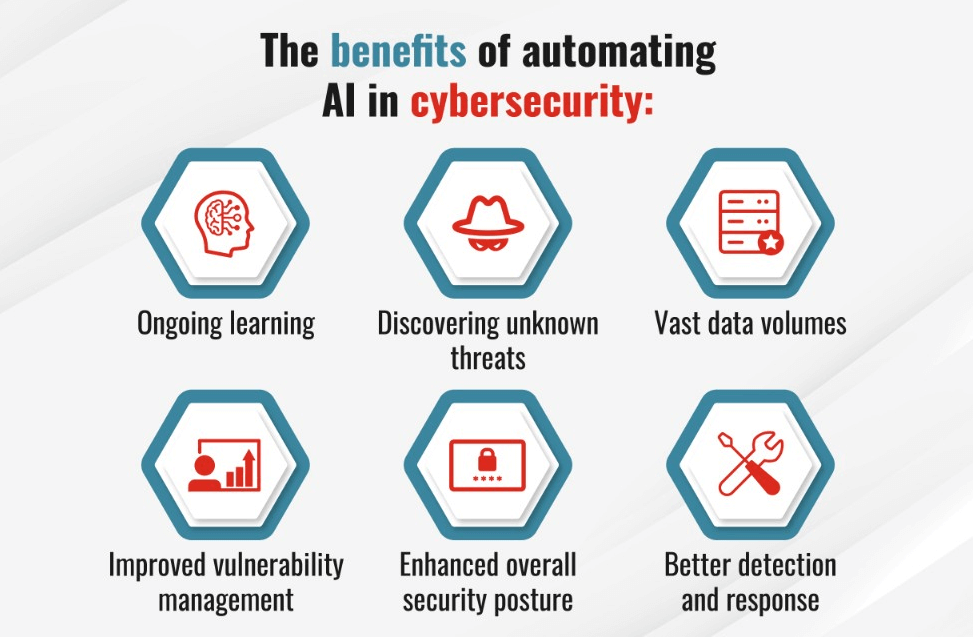
AI adoption in manufacturing and agriculture increases connectivity and data sharing, significantly expanding the attack surface for cyber threats. SMBs, often lacking robust cybersecurity infrastructure, are particularly vulnerable to AI-specific risks, including data breaches, adversarial attacks, data poisoning, and model theft. According to a 2024 analysis, these risks can lead to unauthorized access, manipulation, or misuse of sensitive data, such as proprietary designs or customer information, or even compromise AI systems to attack other networks. For example, in manufacturing, a compromised AI model could manipulate production data, leading to defective outputs, while in agriculture, stolen AI models could expose precision farming strategies. Additionally, AI-driven phishing attacks, amplified by generative AI, pose a growing threat, with 91% of organizations facing such attacks in 2024. Limited resources and expertise make it challenging for SMBs to defend against these sophisticated threats.
Solution: SMBs can strengthen their cybersecurity by prioritizing data integrity and access control. Implement encryption and secure communication protocols to protect sensitive data, such as production or crop yield records, from breaches. Use rigorous validation techniques to detect anomalies in training datasets, guarding against data poisoning that could skew AI decisions. Limit AI application permissions to the minimum required for functionality, reducing the risk of unauthorized actions. Partner with AI vendors that meet stringent security standards, ensuring models and third-party components are vetted for vulnerabilities. Regular security audits and compliance with regulations like GDPR or CCPA are essential, even for SMBs, to avoid legal and financial repercussions. Additionally, integrate AI-based cybersecurity tools, such as email security solutions that detect phishing or malware, and provide employee training to recognize and report threats like AI-generated phishing attempts. By combining these measures with vendor support, SMBs can mitigate AI security risks effectively.
Scaling and Maintaining AI Systems
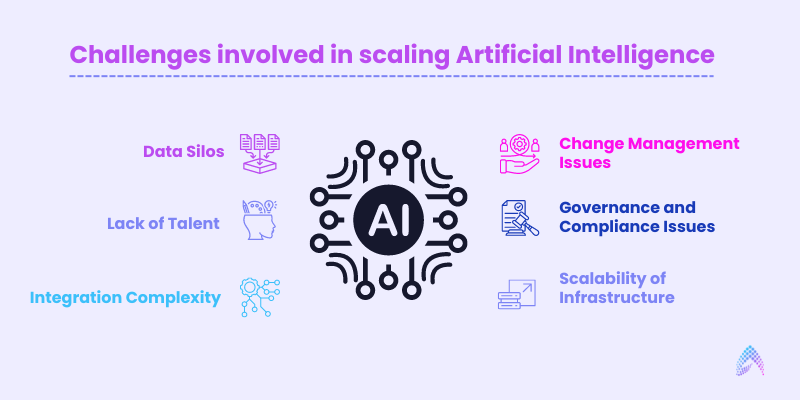
Challenges involved in scaling AI
Scaling AI across multiple production lines, facilities, or fields and maintaining AI models to ensure ongoing accuracy and relevance is a complex challenge for SMBs in manufacturing and agriculture. Limited resources, technical expertise, and infrastructure often hinder SMBs from achieving sustained AI impact. According to a 2024 McKinsey analysis, organizations struggle with complex datasets, obsolete models, and inefficient scaling processes, which can lead to increased costs and diminished returns. For SMBs, these issues are compounded by the need to manage AI with smaller teams and budgets, making it critical to adopt streamlined, cost-effective approaches to scaling and maintenance. Without proper systems, AI models can degrade over time, producing inaccurate predictions that affect production quality or crop yields.
Solution: SMBs can overcome these challenges by leveraging four technical enablers to scale and maintain AI effectively:
Data Products (e.g., Feature Stores): Use centralized data repositories to ensure consistent, high-quality data access for AI models, reducing development time and improving trust in outputs. For example, a manufacturing SMB can use a feature store to standardize sensor data for predictive maintenance.
Code Assets: Adopt reusable code libraries and templates to streamline model development and updates, minimizing redundant efforts. Open-source tools can be particularly cost-effective for SMBs with limited development resources.
Standards and Protocols: Implement standardized processes, such as continuous integration/continuous deployment (CI/CD), to automate model testing and deployment. This ensures seamless integration with existing systems and reduces errors, as demonstrated by an Asian bank that cut AI deployment time from 18 months to under five months using such protocols.
Machine Learning Operations (MLOps): Deploy MLOps platforms to automate model monitoring, retraining, and maintenance, ensuring models remain accurate as data evolves. Cloud-based MLOps solutions are scalable and affordable, allowing SMBs to manage AI without large IT teams.
Practical Steps: Start with cloud-based AI platforms that offer built-in MLOps and scalability features, minimizing infrastructure costs. Pilot scaling efforts on a single production line or field to test processes before broader deployment. Partner with AI vendors to access pre-built data products and MLOps tools tailored for SMBs. Establish a maintenance schedule to monitor model performance and retrain models as needed, using automated alerts for data drift or performance issues. By adopting these enablers, SMBs can scale AI efficiently, maintain model reliability, and drive sustained value in their operations.
8. Navigating Regulatory and Ethical Challenges
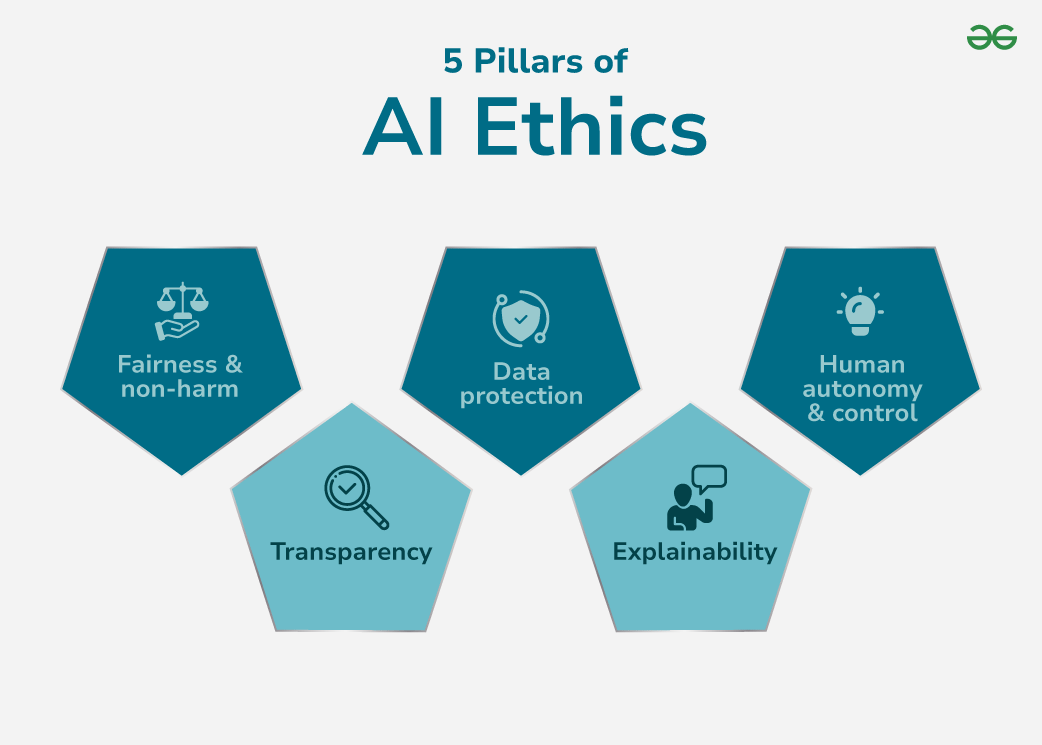
SMBs in manufacturing and agriculture must navigate a complex landscape of regulations and ethical concerns when adopting AI. Industry-specific regulations, such as safety standards (e.g., OSHA in manufacturing), environmental compliance (e.g., EPA guidelines), and food safety standards (e.g., FDA or USDA requirements in agriculture), impose strict requirements that AI systems must meet. Additionally, ethical challenges, including bias in AI models, lack of transparency in decision-making, and potential misuse of data, can erode trust and lead to legal or reputational risks. According to a 2024 Thomson Reuters analysis, organizations using AI face scrutiny over data privacy (e.g., GDPR, CCPA), intellectual property rights, and ensuring AI decisions are fair and explainable. For SMBs, limited legal expertise and resources make it challenging to address these issues, yet non-compliance or ethical lapses can result in significant penalties or loss of customer confidence. For example, an AI system in manufacturing that inadvertently prioritizes certain production batches could violate fairness standards, while an agricultural AI misusing farmer data could breach privacy laws.
Solution: SMBs can mitigate regulatory and ethical risks by adopting a proactive, resource-efficient approach. Partner with AI vendors experienced in industry-specific regulations to ensure solutions are compliant with standards like OSHA, EPA, or FDA. Implement transparent AI systems that provide explainable outputs, such as clear reasoning for production or irrigation decisions, to build trust and meet ethical expectations. Conduct regular bias audits to identify and correct unfair outcomes, using tools provided by vendors or open-source platforms to keep costs low. Establish clear data governance policies to comply with privacy laws, ensuring customer and operational data is handled responsibly. Engage legal counsel or compliance consultants early, even on a part-time basis, to review AI deployments and address intellectual property or ethical concerns. Leverage vendor-provided compliance templates or frameworks to streamline adherence to regulations like GDPR or CCPA. By prioritizing compliance and ethics, SMBs can deploy AI responsibly, minimizing risks while maximizing trust and operational benefits.
Proving Return on Investment (ROI)

AI benefits, like reduced downtime or improved yields, may take time to materialize, making it challenging for SMBs to justify investments to stakeholders.
Solution: Set measurable goals, such as reducing scrap rates by 10% or increasing crop yields by 15%. Use pilot projects to track and communicate results. Leverage case studies from similar SMBs to build confidence in AI’s long-term value.
Case Studies: SMBs Thriving With AI
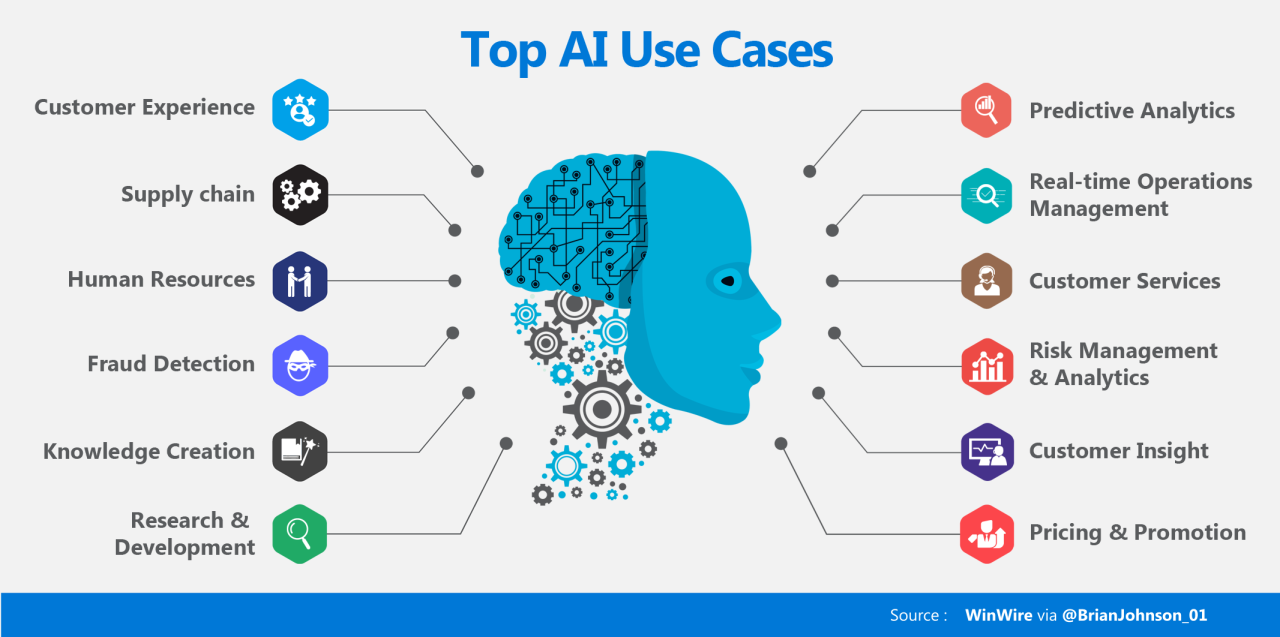
Below are three examples of SMBs successfully overcoming AI adoption challenges in manufacturing and agriculture:
Case Study 1: Precision Machining Co. – Predictive Maintenance (Manufacturing)
Background: Precision Machining Co., a 50-employee SMB producing automotive parts, faced frequent equipment downtime due to unexpected machine failures, costing thousands in lost production.
Challenge: Limited budgets prevented a full equipment upgrade, and the company had minimal data from aging machines.
Solution: The company partnered with an AI vendor to implement a cloud-based predictive maintenance solution. IoT sensors were retrofitted onto existing machines to collect real-time data, analyzed by an AI model to predict failures. A pilot project on one production line managed costs and proved ROI.
Outcome: Downtime decreased by 30% within six months, saving $50,000 annually. The pilot’s success led to scaling the solution across all lines. Employee training ensured staff could use AI insights, reducing resistance.
Key Takeaway: Phased implementation and retrofitting legacy equipment make AI affordable and effective for SMBs.
Study 2: EcoPack Solutions – Quality Control (Manufacturing)
Background: EcoPack Solutions, a 75-employee manufacturer of sustainable packaging, struggled with inconsistent product quality, resulting in high scrap rates and customer complaints.
Challenge: Manual quality checks were slow, and the company lacked AI expertise.
Solution: EcoPack adopted an AI-powered computer vision system for automated quality inspections, integrated with existing lines via a subscription-based platform to minimize costs. The vendor provided employee training to address skill gaps and ease adoption.
Outcome: Scrap rates dropped by 15%, and defect detection improved by 25%, enhancing customer satisfaction. Employees embraced AI as it freed them for higher-value tasks. EcoPack now plans to apply AI to inventory management.
Key Takeaway: Subscription-based models and vendor-supported training help SMBs overcome cost and skill barriers.
Case Study 3: GreenValley Farms – Precision Agriculture (Agriculture)
Background: GreenValley Farms, a 40-employee family-owned farm growing vegetables, faced challenges with inconsistent crop yields due to variable soil conditions and water usage.
Challenge: The farm used outdated irrigation systems and lacked expertise in advanced technologies, with limited funds for major upgrades.
Solution: GreenValley partnered with an AI provider to implement a precision agriculture solution. IoT sensors collected soil and weather data, which an AI model analyzed to optimize irrigation and fertilizer use. A cloud-based platform integrated with existing equipment, and a pilot project on a single field kept costs low. The vendor offered online training to upskill farm workers.
Outcome: Crop yields increased by 20%, and water usage dropped by 25% within one season, saving $30,000 annually. The pilot’s success led to scaling the solution across all fields. Workers, initially skeptical, embraced AI after seeing improved harvests and reduced manual effort.
Key Takeaway: Affordable IoT and cloud-based AI solutions, combined with training, enable agricultural SMBs to modernize without significant capital investment.
AlignX Solutions: Your Partner in AI Adoption
Free Consultation
At AlignX Solutions, we empower SMBs in manufacturing and agriculture to overcome AI adoption barriers. Our tailored consulting, industry expertise, and partnerships with leading AI providers ensure seamless integration of AI into your operations. Whether you aim to modernize production, optimize farming practices, upskill your workforce, or ensure compliance, we’re here to guide you. Our services include:
Data Strategy and Management: Conducting audits and implementing tools to ensure high-quality data for AI systems.
Legacy System Integration: Retrofitting equipment and deploying cloud-based solutions for seamless AI adoption.
Cost-Effective Implementation: Designing phased pilots and securing grants to minimize upfront costs.
Workforce Training: Providing accessible upskilling programs to build AI-ready teams.
Cybersecurity and Compliance: Ensuring robust security and regulatory adherence for AI deployments.
Scaling and Maintenance: Leveraging MLOps and scalable platforms for sustained AI impact.
ROI Tracking: Offering tools and analytics to measure and communicate AI’s value.
Ready to harness AI for your business?
Contact AlignX Solutions at www.alignxsolutions.com to schedule a consultation and start your journey toward smarter, more efficient operations.
Conclusion and Next Steps
AI holds immense potential for SMBs in manufacturing and agriculture, but overcoming adoption challenges requires strategic planning and expert support. By addressing data quality, legacy systems, costs, workforce readiness, cybersecurity, scaling, regulatory compliance, and ROI, SMBs can unlock AI’s transformative benefits. The case studies of Precision Machining Co., EcoPack Solutions, and Weihe Farm demonstrate that with the right approach, SMBs can achieve significant gains in efficiency, profitability, and competitiveness.
Next Steps:
Assess Your Needs: Conduct an internal review to identify AI opportunities and challenges specific to your operations.
Engage with AlignX Solutions: Schedule a consultation at www.alignxsolutions.com to explore tailored AI solutions.
Start Small: Launch a pilot project to test AI’s impact, using insights from this white paper to guide implementation.
Build a Roadmap: Partner with AlignX Solutions to develop a long-term AI strategy that aligns with your business goals.
AlignX Solutions is your trusted partner in navigating the AI landscape. Contact us today to transform your operations and secure a competitive edge in the AI-driven future.